










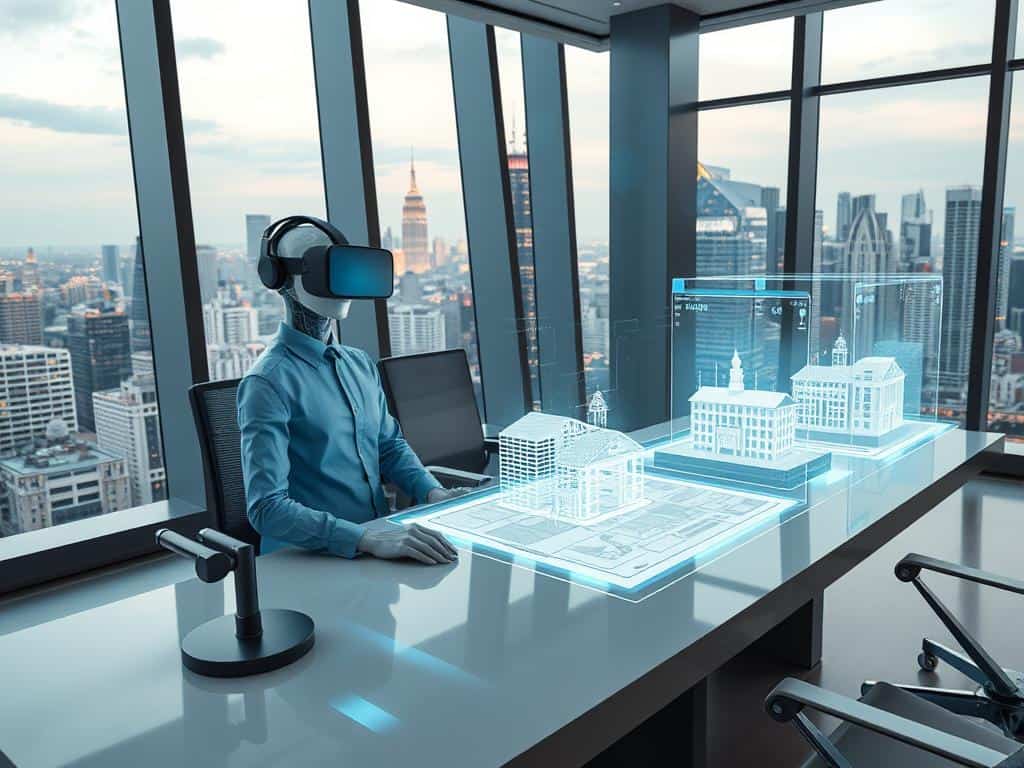
Looking back, I see how technology has changed real estate. No more relying on word-of-mouth or printed ads. Now, Real Estate Technology leads the way in buying, selling, and managing properties. It’s clear that what was once a luxury is now a must-have, making our work easier and our experiences better.
Did you know 99% of home buyers aged 23 to 56 start online? This shows how information is at our fingertips. It’s given buyers and investors new tools to navigate the market. I loved using virtual tours to explore properties, feeling in control, not just a spectator.
Property management software has also made a big difference. It helps owners manage their investments better. And, it’s made data security and transaction stability much better. These technologies are not just changing the industry; they’re securing the future of homeownership for many.
Key Takeaways
- Real estate technology has become essential for modern home buying and property management.
- Almost all home buyers now rely on the internet to find properties.
- Innovative tools streamline the buying and selling processes significantly.
- AI and advanced data analytics are improving decision-making and efficiency.
- The use of virtual tours is changing how we view and engage with properties.
Innovations Driving Change in Real Estate
The real estate world is changing fast. New tech is making things more efficient and better for clients. Artificial intelligence, smart homes, and virtual tours are leading this change.
Impact of Artificial Intelligence (AI) on the Industry
AI is changing real estate in big ways. It helps predict market trends with great accuracy. This lets agents find the right buyers and improve their marketing.
AI also makes transactions smoother. It cuts down on mistakes and speeds up buying and selling.
Emergence of Smart Homes and IoT
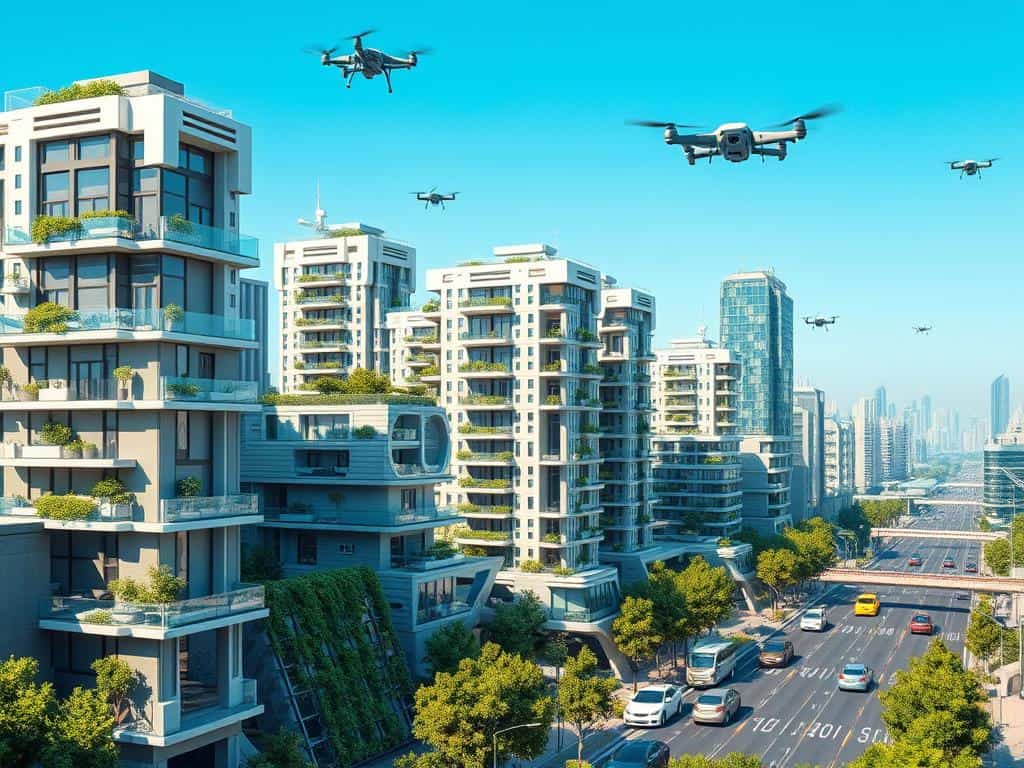
Smart homes and IoT devices are changing property management. They offer control over climate, energy, and security from anywhere. This gives landlords and homeowners valuable insights.
This tech makes tenants happier and properties more attractive. It’s becoming key for future investments.
Virtual Tours Revolutionizing Property Viewing
Virtual tours are changing how we look at properties. They let people explore homes online, no matter where they are. This appeals to tech lovers and helps them make quick decisions.
Real Estate Technology and Its Applications
Technology has changed the real estate world a lot. It brings new ways to work more efficiently and make clients happier. These changes help in many areas, like managing properties and understanding the market.
Transforming Property Management with Software Tools
Property management has gotten a lot better with new software. This software handles tasks like fixing things, sending bills, and collecting rent. It lets managers focus on big decisions, making everything run smoother and tenants happier.
Data Analytics in Market Trends and Insights
Big data and smart tools have changed how we see the market. Agents can now understand what buyers want and what’s happening in the market. This helps them offer better services and make smart choices with the help of AI.
Enhancing Client Communication and Digital Services
New tech has made talking to clients easier for realtors. Digital tools make sharing documents and talking securely simple. This makes everything clearer and builds stronger relationships, leading to better deals.
Conclusion
The impact of technology on real estate is huge and changing everything. New tools like artificial intelligence and virtual reality are changing how we see and interact with properties. The global real estate market is growing fast, with a value of USD 3.69 trillion in 2021 and expected to grow more.
I think the future of property management is about using these new tools wisely. We need to mix technology with personal touch to keep clients happy. This way, we can make things run smoother and improve our service.
But, we also need to be careful with these new technologies. We must keep human connection strong as we use these tools. I’m hopeful that real estate will become more efficient and open to everyone, leading to a bright future.