









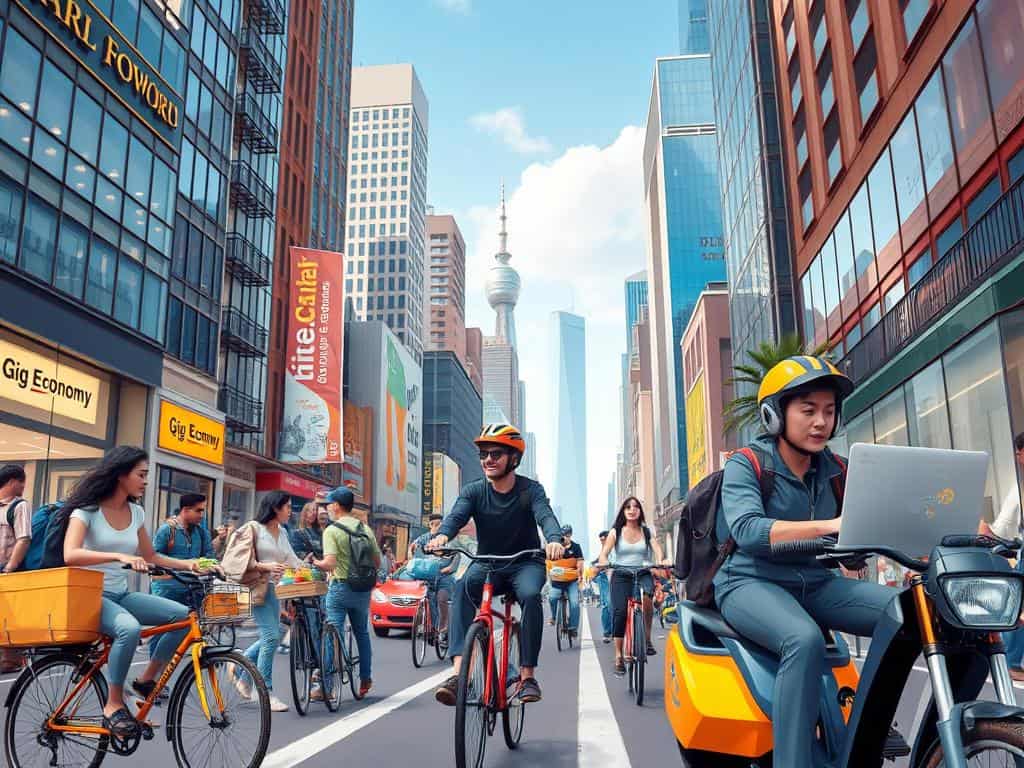
Ever dreamt of a job where you pick your hours, projects, and where you work? Many of us have. The gig economy is more than a trend; it’s a big change in how we see work, freedom, and success. Through freelancing and gig work, I found a way to make a living and follow my passions.
This flexibility lets us build our careers around what matters most to us. It’s great for balancing family life or chasing our dreams. Let’s dive into how the gig economy is changing work, the workforce, and what it means for our future.
Key Takeaways
- The gig economy generated $204 billion in 2018 and is projected to grow to $455 billion by 2023.
- Approximately one-third of U.S. workers are involved in the gig economy and independent work.
- 45% of freelancers belong to the Millennial generation, seeking flexibility and tech-driven opportunities.
- 44% of gig workers reported earning more than their counterparts in traditional employment.
- The average hourly rate for independent workers in North America was around $44 in 2022.
The Rise of the Gig Economy
The gig economy has changed how we work. It’s all about short-term, flexible jobs found online. Let’s dive into what it is, how big it is, and what’s happening now.
Definition and Scope
The gig economy is a big change from old jobs. People work as freelancers, using sites like Uber and Upwork. This new way of working lets people choose from many jobs in different fields.
It’s all about wanting freedom and control over work. This is a big shift from the old job security.
Current Trends and Statistics
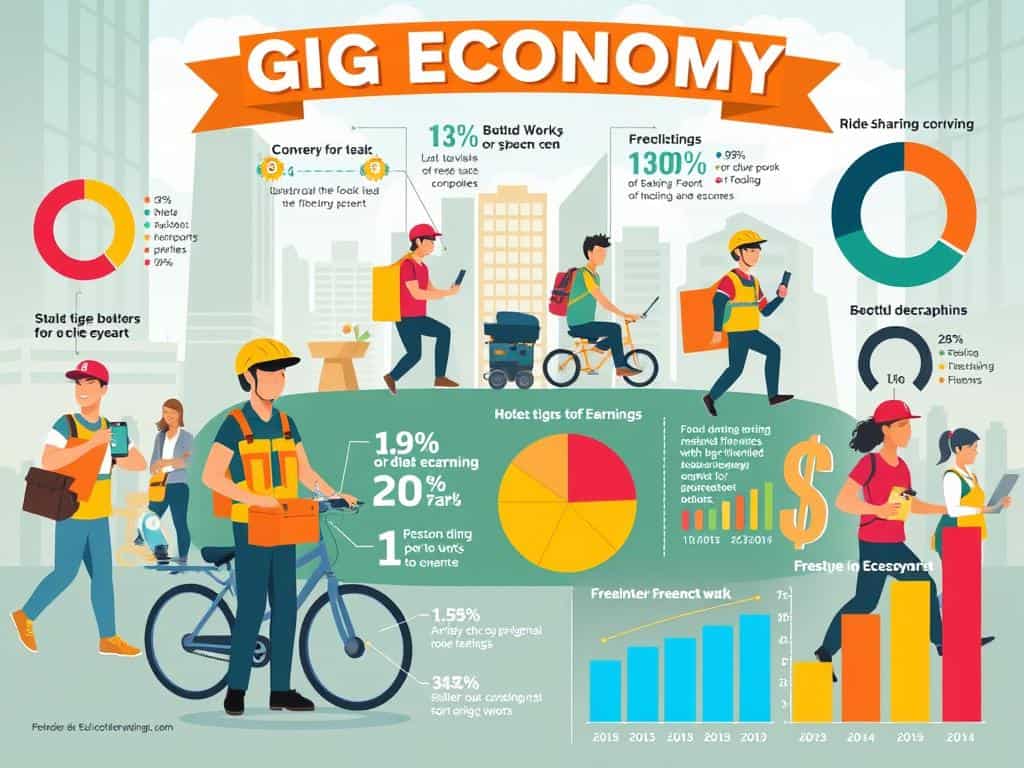
More people are joining the gig economy than ever before. In the U.S., the number of gig workers went up from 10.1 percent in 2005 to 15.8 percent in 2015. By 2016, 24 percent of Americans were making money through digital platforms.
The number of self-employed people grew by over 19 percent. Their earnings went up by nearly 21 percent too. The South saw the biggest jump in self-employment, with a 27 percent increase.
Freelancing is not just a trend. A big 39 percent of American adults have a side job. Many think these jobs will be key for their future finances. The gig economy grows thanks to new tech, making it easier and faster to work.
But, gig workers often miss out on benefits like health insurance and retirement plans. This shows the challenges of this new work world.
The Impact of the Gig Economy on Traditional Employment
The gig economy has changed how we think about work. More people want job flexibility and to work on their own terms. This isn’t just for young people anymore. It’s for parents and retirees too.
Being able to choose when and what to work on is appealing. It’s changed what work means today.
Changing Workforce Preferences
Worker preferences have shifted with the gig economy. Many now value flexibility over job security. Gig work lets people grow their skills and balance work and life.
Recruitment and Business Implications
Companies are adapting to the gig economy. They use gig workers for specific tasks, which saves money and brings in new talent. But, it’s hard to keep quality high and teams cohesive.
Businesses that succeed adapt to these changes. They create workspaces that attract both full-time and gig workers. This way, they stay relevant in a changing job market.
Conclusion
The gig economy is changing the way we work, and it’s here to stay. It offers flexible work options thanks to technology and a need for better work-life balance. But, there are big challenges too.
Many gig workers make less than the minimum wage. They also miss out on important benefits like sick pay and health insurance. This raises big concerns about their treatment and job security.
The gig economy has both good and bad sides. It gives opportunities to those who can’t find regular jobs, like caregivers or people with disabilities. But, it also risks exploitation and lower wages and working conditions.
This creates tension in the job market. Traditional jobs in areas like transportation and hospitality are feeling the squeeze. Gig workers often earn less and have fewer protections.
Businesses and regulators need to find ways to make gig work fair. They must balance flexibility with fair labor practices. Building strong relationships between employers and employees is key to a sustainable gig economy.
The future of work will be shaped by the gig economy. We must work together to address these challenges. This way, we can create a fair and equitable future for everyone.