







I feel a deep sense of urgency about the Housing Affordability Crisis. It’s not just a number or a political issue. It’s a real problem that affects people every day. Families around me are struggling with high home prices, making it hard to own a home.
Former Trammell Crow Co. leader J. Ronald Terwilliger called this crisis the biggest housing problem after the Great Depression. It’s hard to understand why we can’t make housing a priority, like water and roads, when so many are struggling.
Affordable housing is key to a community’s health. When people have stable homes, the local economy thrives. Families with less housing costs can invest in their neighborhoods, boosting the economy.
But the reality is harsh. Median house prices are now six times the median income, a huge jump from 20 years ago. Essential workers, like teachers and police, can’t afford homes in their own communities. This article will show how housing unaffordability affects not just individuals but our whole community.
Key Takeaways
- The Housing Affordability Crisis is the biggest issue after the Great Depression.
- Median house prices are now six times the median income.
- Stable housing leads to better community engagement and economic growth.
- A majority of first-time homebuyers face huge financial challenges.
- Efforts to address the crisis must focus on tax incentives and more affordable housing.
The Economic Ripple Effects of the Housing Affordability Crisis
The housing crisis has big effects on the economy, beyond just homes. Families with high housing costs face hard choices. These choices hurt their financial health and life quality. This hurts local economies as well.
The Disconnect Between Home Prices and Incomes
Home prices and incomes are far apart, causing big problems. In places like Kansas City, there’s not enough housing. The U.S. is missing nearly 4 million homes, leading to a housing shortage.
This shortage hits my community hard, where 64,000 families can’t find affordable homes. Low wages and rising housing costs stop people from buying homes. This creates family instability.
Impact on Local Economies and Job Growth
The housing crisis hurts local economies a lot. High housing costs burden people and slow down job growth. Businesses find it hard to keep employees when housing is far away.
Home construction, which is key to the economy, is slowed by zoning rules. Without changes, like those suggested by Jenny Schuetz, our local economies could suffer long-term.
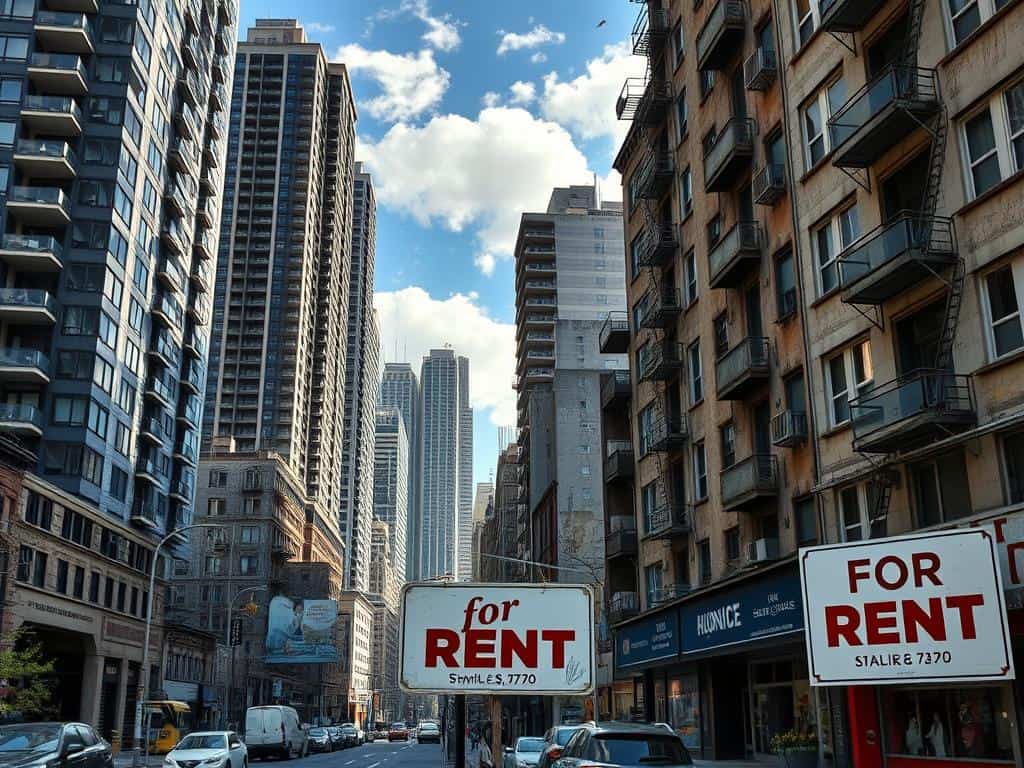
How Rising Home Prices Affect My Community
Rising home prices in my community are causing big problems. They affect more than just our wallets. They also impact the stability of essential workers like police, firefighters, and teachers.
These workers are key to keeping our neighborhoods safe and running smoothly. But, as housing costs go up, many can’t afford to live in their communities. This makes it hard to keep these important jobs filled, leading to lower service quality.
The Stability of Essential Workers
When essential workers can’t afford to stay, our community suffers. A 2004 report showed that high housing costs make it hard to keep employees. This problem is even bigger today, with states like Indiana needing skilled workers more than ever.
When these workers move away, our services get worse. This affects everything from how fast help arrives to how well our kids learn.
The Risk of Fractured Families
Rising home prices also threaten our families. Many parents worry their kids might have to move for cheaper housing. This could break up families and weaken our community ties.
Studies show that unstable housing costs us billions in healthcare and education. We need to find ways to make housing affordable fast. If we don’t, we risk losing the strength of our community for short-term gains.