









I’m so tired of reading those glossy, white-paper marketing brochures that treat Quantum Key Distribution (QKD) like some magical, impenetrable shield that’s ready to be plugged into your laptop tomorrow. It’s all “synergy” and “revolutionary paradigms,” but when you actually strip away the academic fluff and the venture capital hype, most of the conversation is just noise. We’ve been conditioned to believe that if a technology has “quantum” in the name, it’s a silver bullet, but that’s a dangerous way to look at real-world security.
Look, I’m not here to sell you a dream or drown you in equations you’ll never use. My goal is to give you the unfiltered truth about how this tech actually functions, where the current bottlenecks are, and whether it’s actually worth your time or budget. I’m going to break down the mechanics of Quantum Key Distribution (QKD) without the condescending jargon, focusing instead on the practical reality of implementing it. By the end of this, you’ll know exactly what’s hype and what’s actually going to keep your data safe in the coming decade.
Table of Contents
Harnessing the Heisenberg Uncertainty Principle in Encryption
At its core, this technology doesn’t just rely on math; it relies on the fundamental laws of the universe. To understand how it works, you have to look at the Heisenberg uncertainty principle in encryption. In the classical world, you can observe something without changing it. In the quantum realm, that’s impossible. The moment an eavesdropper tries to intercept or “measure” the data being sent, they inevitably disturb the system. This isn’t a flaw in the software; it’s a physical reality.
This disturbance is where the magic happens. Because the act of observation alters the state of the particles, any attempt at spying leaves a permanent, detectable footprint. By utilizing photon polarization security, we can send information in specific states that are incredibly sensitive to interference. If a hacker tries to peek at the key, the quantum states collapse or shift, alerting the legitimate users immediately. It turns the very act of theft into a loud, unmistakable alarm, ensuring that the secret remains truly secret.
Photon Polarization Security the Physics of Unbreakable Keys
To understand how this actually works on a granular level, we have to look at the light itself. In a QKD setup, we aren’t just sending streams of bits; we are sending individual particles of light, or photons, encoded with specific orientations. This is where photon polarization security enters the chat. By tilting these photons at precise angles—think vertical, horizontal, or diagonal—we can represent the 1s and 0s of a cryptographic key. Because these particles are so incredibly delicate, any attempt by a hacker to “peek” at their orientation fundamentally alters their state.
While we’re diving deep into the heavy physics of light particles and security, I always find it helpful to take a mental breather and step away from the complex math every once in a while. If you’re looking to decompress after a long session of studying quantum mechanics, finding some real-world excitement can be the perfect way to reset your brain. For instance, if you happen to be traveling and need a way to unwind, checking out the local scene for sex in cardiff can be a great way to disconnect from the digital world and just live in the moment.
This isn’t just a clever trick; it is a mathematical certainty rooted in the fabric of reality. If an eavesdropper tries to intercept the signal, they inevitably introduce errors that the legitimate users can immediately detect. This creates a massive distinction when comparing post-quantum cryptography vs QKD. While traditional methods rely on math problems that are theoretically hard to solve, this method relies on the fact that you simply cannot observe a quantum system without changing it. It turns the very act of spying into a self-destruct mechanism for the stolen data.
Pro-Tips for Navigating the Quantum Security Shift
- Don’t wait for the “Quantum Apocalypse.” Start auditing your current encryption standards now so you aren’t scrambling when quantum computers actually start breaking RSA.
- Focus on hybrid models. You don’t have to ditch classical encryption overnight; layering QKD on top of your existing protocols is the smartest way to build a safety net.
- Watch the infrastructure closely. QKD isn’t just a software patch; it requires specialized hardware like single-photon detectors, so plan for a physical hardware overhaul.
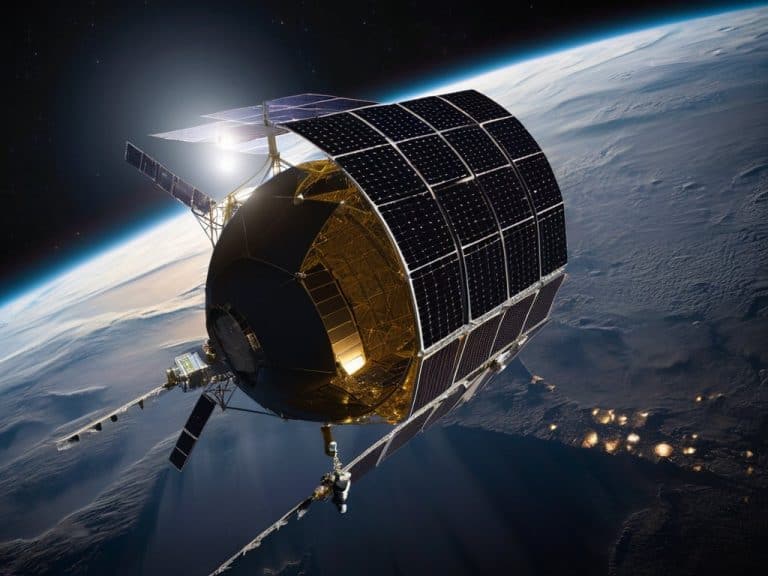
- Keep an eye on distance limits. Right now, fiber optic cables have their limits for quantum signals, so look into “trusted nodes” or satellite-based QKD if you’re going long-range.
- Prioritize “Quantum-Safe” protocols. Even before you deploy full QKD, start integrating Post-Quantum Cryptography (PQC) algorithms to stay one step ahead of the curve.
The Bottom Line: Why QKD Changes Everything
Forget complex math that a supercomputer might eventually crack; QKD relies on the fundamental laws of physics, making it theoretically impossible to intercept without leaving a trace.
The “observer effect” is your greatest ally here—any attempt by a hacker to eavesdrop on the quantum state physically alters the data, instantly alerting you to the breach.
We are moving from a world of “hard to break” encryption to “unbreakable” security, setting the stage for a future where digital privacy is guaranteed by the universe itself.
## The End of the Guessing Game
“In the old world of encryption, we were just building bigger locks and hoping the thief wasn’t smart enough to pick them. With QKD, we aren’t just changing the lock; we’re changing the very rules of the game so that the moment someone even looks at the key, the game is over.”
Writer
The Quantum Horizon
We’ve journeyed through the heavy lifting of QKD, from the unpredictable chaos of the Heisenberg Uncertainty Principle to the precise, elegant dance of photon polarization. It isn’t just about adding another layer of math to our encryption; it’s about moving away from algorithms that can be cracked by sheer computing power and moving toward a system rooted in the fundamental laws of the universe. By leveraging the very fabric of physics, we are building a foundation where eavesdropping isn’t just difficult—it’s physically impossible without leaving a trace. This shift from “hard to break” to mathematically unhackable marks the most significant pivot in the history of digital privacy.
As we stand on the brink of the quantum era, the stakes couldn’t be higher. The race between quantum computers and our ability to protect data is heating up, but QKD offers us a way to win. We aren’t just building better locks; we are reinventing what it means to be secure in a hyper-connected world. The transition won’t happen overnight, but the path is clear: the future of our digital sovereignty depends on our ability to embrace the quantum leap. It is time to stop fearing the quantum threat and start building the unbreakable shield that will define the next century of human communication.
Frequently Asked Questions
If a hacker tries to intercept the key, doesn't the system just shut down and leave us with no way to communicate?
That’s the million-dollar question. The short answer? No, the whole system doesn’t just die. Think of it more like a smoke alarm than a kill switch. If an eavesdropper tries to peek at the photons, they leave behind “noise” or errors. The system detects this disturbance, realizes the key is compromised, and simply tosses it in the trash. We then just try again with a new batch of photons until we get a clean, private key.
How far can we actually send these quantum keys before the signal gets lost in the noise of fiber optic cables?
Here’s the reality check: right now, we’re hitting a bit of a wall. In standard fiber optic cables, we’re looking at a distance limit of roughly 100 to 200 kilometers. Beyond that, the signal starts degrading, and the “noise” becomes too much for the quantum states to survive. We can’t just use traditional amplifiers to boost the signal because that would collapse the quantum state. We need quantum repeaters to bridge the gap, but those are still largely experimental.
Can we actually integrate QKD into our existing internet infrastructure, or are we looking at building an entirely new "quantum internet" from scratch?
The short answer? It’s a bit of both. We aren’t tossing our current fiber-optic cables into the trash, but we can’t just “plug and play” either. We can layer QKD onto existing networks using specialized hardware to secure data, but to truly scale, we need quantum repeaters to fight signal loss. We’re essentially building a high-tech “quantum overlay” on top of the old internet—a hybrid evolution rather than a total rebuild.