









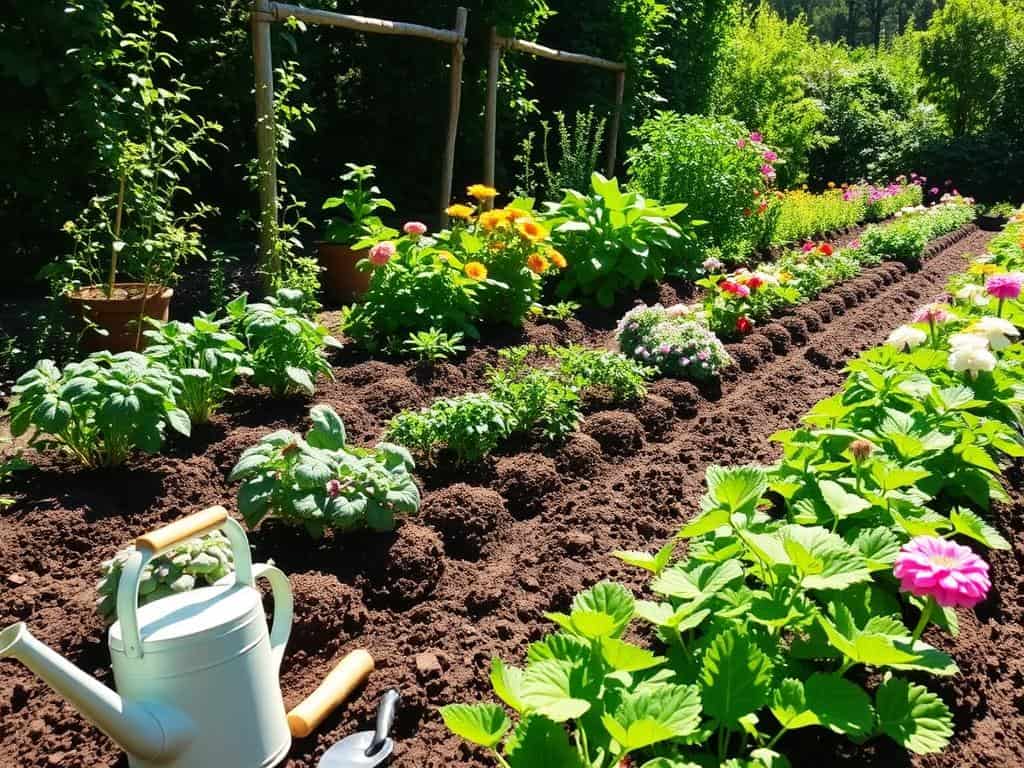
Looking back, I’m amazed at how far I’ve come in gardening. I started with a small 10’x10’ garden 15 years ago. It’s been more than a home project; it’s changed me. It connects me with nature and lifts my mood.
There’s joy in watching plants grow from tiny seeds into beautiful plants. If you’re feeling stressed, gardening might be the answer. With these five easy tips, you can create a vibrant garden that brings happiness and grows your favorite plants.
Over 17 years, I’ve grown many gardens, each one helping me get better. Gardening is for everyone, no matter where you start. You can learn to grow many plants in just five years.
Just remember, patience, the right plants, and knowing what your garden needs are key. Let’s dive into tips to help you grow your dream garden.
Key Takeaways
- Start small to build confidence and avoid feeling overwhelmed.
- Choose your plants based on their sunlight and water needs.
- Invest in high-quality soil for healthier plants.
- Understand plant hardiness zones for successful planting.
- Regular maintenance is key to a flourishing garden.
Find the Perfect Spot for Your Garden
Finding the right spot for your garden is key to its success. Sunlight and water access are the most important factors. They greatly affect your plants’ health and growth.
Understanding Sunlight Requirements
Most vegetables need full sun to grow well. They need at least 6 to 8 hours of direct sunlight each day. Leafy greens like lettuce and spinach can do with 4 to 6 hours of sunlight.
Root vegetables, on the other hand, do best with 6 to 8 hours of sunlight. To find the best spots for planting, watch how sunlight moves in your yard. This helps ensure your plants get enough light to grow well.
Proximity to Water
Having water nearby is important for watering your garden. Plants need about 1 inch of water each week to stay healthy, more during dry times. Having your garden beds near a hose or faucet makes watering easier.
It’s good to check the soil moisture before watering. If it’s damp, wait a bit. Using garden beds or containers helps keep moisture in and prevents too much water.
Essential Gardening Tips for Beginners
Starting my gardening journey has been rewarding. I focus on starting small and choosing the right methods. Small gardens are easy to manage and teach me new gardening skills.
Start Small and Simple
I suggest starting with easy plants like tomatoes, herbs, or lettuce. This builds confidence and lets me try new things. As I get better, I can grow my garden bigger.
A small garden can become a lively space. Knowing what each plant needs, like light and water, helps a lot.
Invest in Quality Soil
Quality soil is key to a good garden. I choose soil that drains well and holds moisture. Before planting, I check the soil type to make sure it’s right for my plants.
Adding organic nutrients like compost helps my plants grow. Checking and improving the soil regularly makes my garden and gardening better.
Gardening Tips for Successful Plant Selection
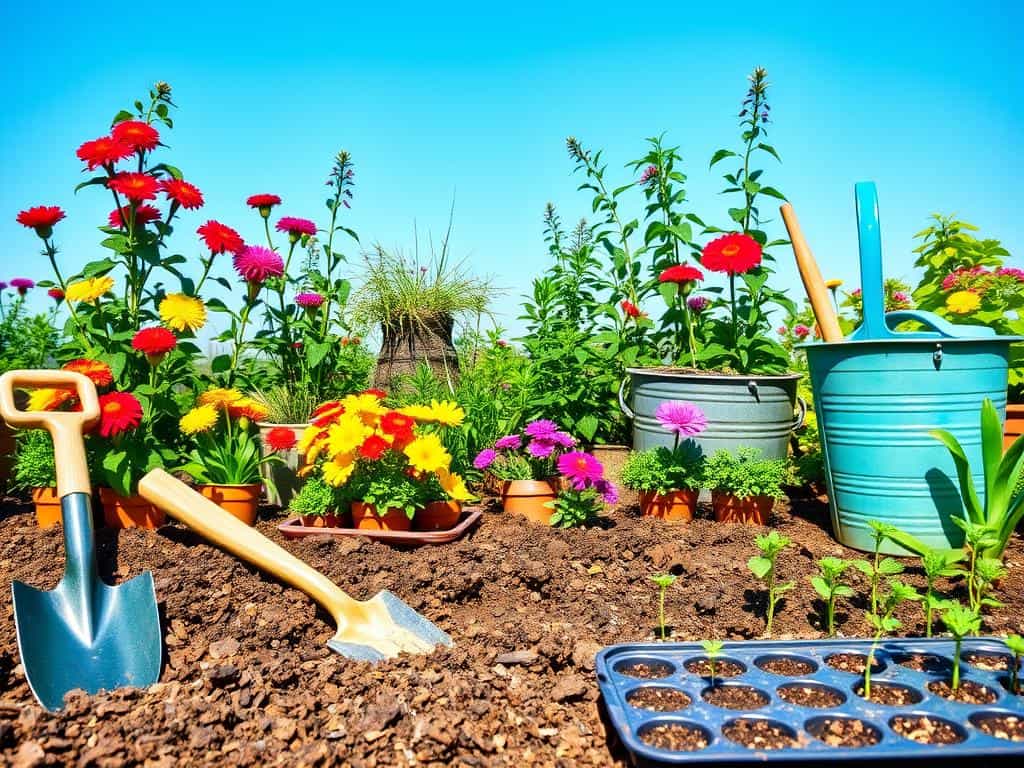
Starting a garden means picking the right plants. Knowing your area’s climate and soil is key. The USDA Plant Hardiness Zone Map helps pick plants that will do well.
By choosing plants that fit your local environment, you set yourself up for success. This way, your garden will flourish.
Choosing the Right Plants
When picking plants, think about how much sun they need and how much water they want. Sun-loving plants do best in bright spots. Most plants need about 1 to 2 inches of water each week.
Having your garden near a water source makes watering easier. This is important, as it helps your garden during dry times.
Consider Disease Resistance
Choosing plants that resist diseases is also smart. These plants need less care because they fight off pests and diseases better. This makes your garden healthier and easier to care for.
By picking disease-resistant plants, your garden will look better and last longer. It’s a smart choice for any gardener.
Conclusion
Reflecting on my gardening journey, I see that success starts with a solid base. The right location, quality soil, and careful plant choices are key. These steps turn a simple area into a lush, productive space.
Gardening is more than just plants; it’s a journey that connects us to nature. It offers many benefits, like physical exercise and better mental health. Studies show it can boost mood, reduce anxiety, and improve brain function.
Let’s cherish our gardens as a journey of growth, for both the soil and us. Whether you’re new or looking to improve, remember these tips. Every seed you plant brings you closer to your dream garden.