










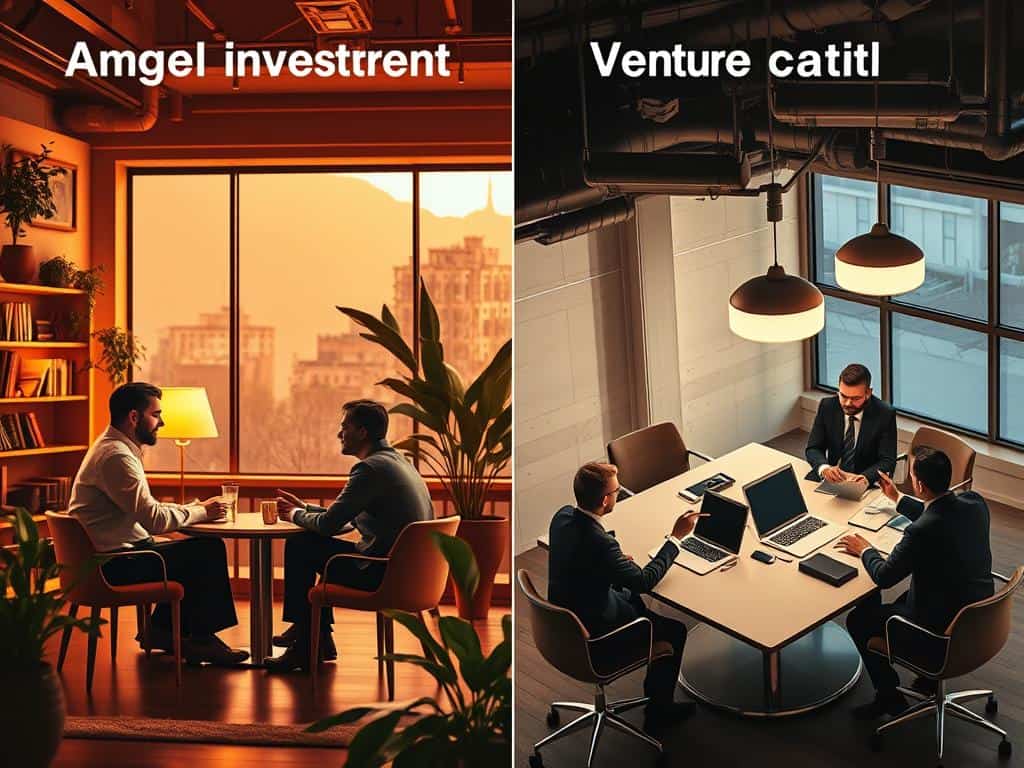
Have you ever dreamed big but felt unsure about how to start? As someone who wants to start a business, I’ve felt the same way. It’s like standing at a crossroads, wondering if to choose angel investment or venture capital. Each path has its own set of opportunities and challenges, depending on where you are in your business journey.
Angel investors can give your startup the boost it needs, with their money and advice. Venture capital firms, on the other hand, offer big investments but want a bigger share of your company and fast growth. Knowing the differences is key to making your business successful. So, if you’re trying to decide, you’re not alone. Let’s look at the main differences between angel investment and venture capital to see which one fits your goals.
Key Takeaways
- Angel investors typically invest between $100,000 and $1 million, while venture capital deals often average $9.9 million.
- Understanding your funding needs is critical before deciding between angel investment and venture capital.
- Venture capitalists usually own a significant portion of the company, about half by the exit.
- Returns for angel investors can range from 20% to 40% annually, whereas VCs see about a 57% return.
- Choosing the right type of investment depends on your business goals and stage.
Understanding the Basics of Angel and Venture Capital
Startups have many ways to get funding. Angel investing and venture capital are two big ones. Knowing the basics is key for getting money to grow your business.
What is Angel Investment?
Angel investors are rich people who give money to new startups. They usually give between $25,000 and $100,000. This money is vital for startups to start working.
What is Venture Capital?
Venture capital firms pool money to invest in growing companies. They look for bigger investments, starting at $3 million. They want to see that a company works before investing.
Key Differences between Angel and Venture Capital
Knowing the difference between angel and venture capital is important. Angel investors give money and advice but don’t get involved in daily work. Venture capitalists want to help make decisions and might join the company’s board.
Angel investors usually leave after two to five years. Venture capitalists stay longer, aiming for big returns. Both are important for growing businesses.
When to Consider Angel vs Venture Capital
Choosing between angel and venture capital funding depends on your startup’s needs. Think about your business’s stage and what support you need. This will help you decide if angel investment or venture capital is right for you.
Ideal Scenarios for Angel Investment
Angel investing is great for startups in the early stages. Founders with a good idea but no solid business plan or market success are good candidates. Angels invest their own money, usually between $10,000 and $500,000, for a 5% to 20% equity stake.
They offer more than just money. They also give valuable advice and guidance. This is very important for startups in tech fields like healthcare and software.
When to Seek Venture Capital Funding
Venture capital is for startups ready to grow big and need a lot of money. Series A funding is usually $2 million to $15 million. Series B and C can go up to $30 million or more, based on the startup’s growth and market readiness.
Venture capitalists manage big funds and look for bigger stakes, often 10% or more. They do a lot of research before investing. They want startups with big growth plans and a strong market presence.

Angel vs Venture Capital: Evaluating the Risks and Rewards
It’s important to know the risks of angel investing and venture capital before you dive in. Both can offer big rewards, but they also come with their own set of challenges and unknowns.
Risk Factors in Angel Investing
Angel investing is risky, mainly because startups can be unpredictable. Successful investments might see returns of 20% to 40% a year. But, many startups fail, which means big risks for angel investors.
To invest, you need to make at least $200,000 a year for two years. It’s a big financial step. To lower risks, spread your investments across different startups. Also, do your homework well to check if the startup has a good chance of success.
Expected Returns from Venture Capital
Venture capital usually offers around 57% annual returns, which draws in many investors. Venture capitalists put in big money, from $1,000,000 to $10,000,000, and aim to exit in five to seven years. They try to manage risks by carefully choosing investments.
While the high returns are tempting, they can be volatile due to the economy. Venture capital deals range from $1.2 million for seed stage to nearly $10 million for later stages. In 2021, venture capital funding hit a record $671 billion. Both angels and VCs look at the startup’s market and team when deciding to invest.
Conclusion
Understanding angel and venture capital investments is key for startup funding. Angel investors help early-stage companies with smaller amounts, giving mentorship and connections. Venture capitalists invest more in established startups, taking a bigger share of the company.
Choosing between angel and venture capital depends on the business model and stage. The right funding can shape a startup’s future. Entrepreneurs must carefully consider their options to match their goals.
Deciding between angel and venture capital comes with its own set of challenges and benefits. The choice affects a startup’s growth and success in a competitive market. It’s vital to make funding decisions thoughtfully.