










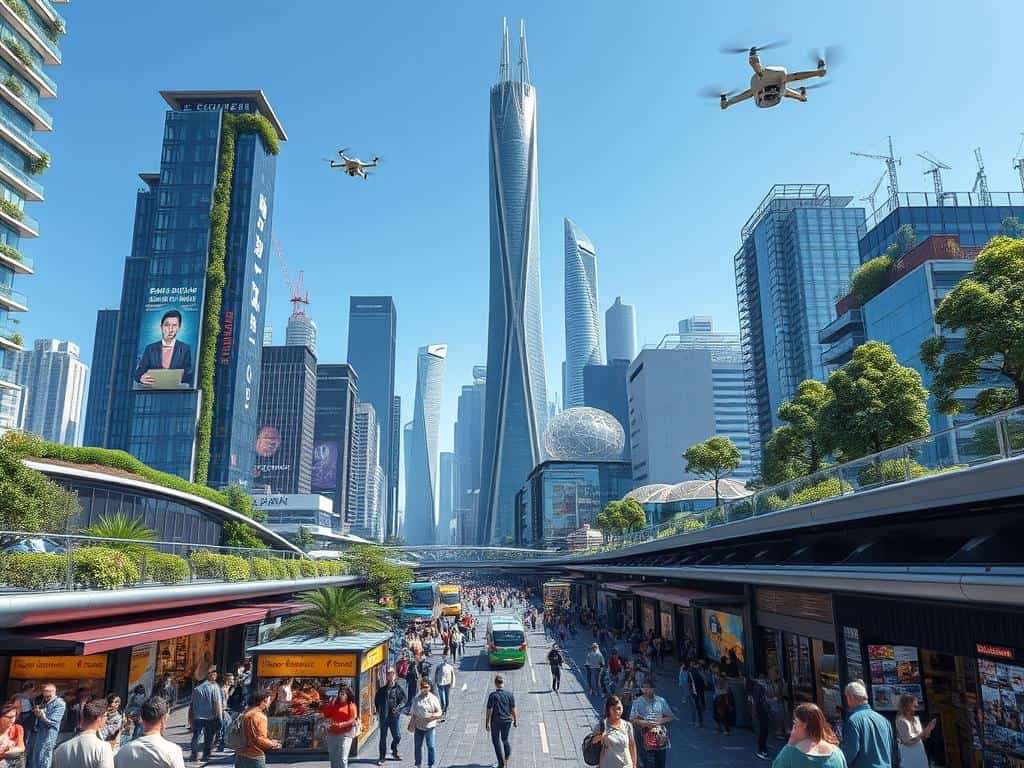
Living in cities today is different from before. Streets are busier, and the air feels thick with city sounds. But, there’s hope. Smart Cities are using technology to make cities better and greener.
Cities like Zurich are leading the way. They use advanced tech to improve life for everyone. This makes me think about a future where cities are cleaner and safer.
Key Takeaways
- The significance of Smart Cities is increasing with rising urban populations.
- Technology, particular IoT and AI, plays a key role in urban innovation.
- Smart Cities aim to boost economic growth, cultural exchange, and environmental sustainability.
- Cities like Copenhagen and Singapore are examples of successful smart city projects.
- The 2024 Smart City Index shows how cities use tech to solve urban problems.
- Smart solutions improve public safety and quality of life.
- Digital equity and affordable housing are key to successful Smart Cities.
The Foundation of Smart Cities
Smart cities rely on key technologies to innovate. These technologies help manage resources, improve public services, and boost quality of life. They also help cities deal with growing populations and climate change.
The Role of Technology in Urban Innovation
The Internet of Things (IoT) is at the core of smart cities. It connects devices to manage energy, transport, and cleaning. Berlin is a great example, using IoT to aim for climate neutrality.
The city uses IoT for better energy management and open data for mobility. This makes living conditions better.
Key Innovations Driving Smart Cities
Artificial Intelligence (AI) and big data are key for smart cities. They help planners make smart decisions. Los Angeles is using AI for better traffic and public transport.
Blockchain ensures data is safe and open. This is important for smart city collaborations.
Smart Cities: Transforming Urban Markets
Urban areas are growing fast. Smart city technologies are key to making them better. They help reduce waste and manage resources well, improving life in cities.
Enhancing Efficiency and Sustainability
Smart cities use smart systems with real-time data. This makes many things better, like traffic and public transit. It also helps with waste and cuts down on pollution.
Micro-mobility hubs with electric bikes and scooters are becoming popular. They help reduce traffic and make cities greener. Soon, smart storage with virtual addresses will make life even easier for city folks.
Public Safety and Quality of Life Improvements
Keeping people safe is a big deal in smart cities. They use advanced surveillance and predictive analytics. This helps respond quickly to dangers, making cities safer.
These steps are key to a better life in cities. Smart cities focus on making life better for everyone. They improve access to services and create jobs, helping small businesses and residents.
Conclusion
The growth of smart cities is key for the future of living in cities. They use technology to handle the challenges of growing cities and limited resources. Working together, cities, businesses, and communities are driving innovation to meet each city’s needs.
By adopting new smart city models, like Vienna and Vancouver, cities are solving big problems. They’re focusing on affordable housing and equality. Smart technologies, like IoT and AI, make cities safer and more efficient, improving life for everyone.
Looking ahead, cities must keep innovating and working together. With more people living in cities, the need for smart solutions is urgent. Smart cities are about more than tech; they’re about creating places where everyone thrives and growth is sustainable.