










I remember the first time I downloaded one of those fancy encrypted messaging apps, thinking I was finally stepping up my privacy game. There I was, a tech-savvy warrior in the digital trenches, armed with promises of end-to-end encryption and messages that would self-destruct like a high-tech spy film. But instead of feeling invincible, I found myself in a spiral of paranoia. Was my data truly safe, or was I just another pawn in the grand chessboard of digital illusion? My friends, of course, had a field day mocking my newfound “secret agent” status, screenshotting my every typo before I could hit delete.
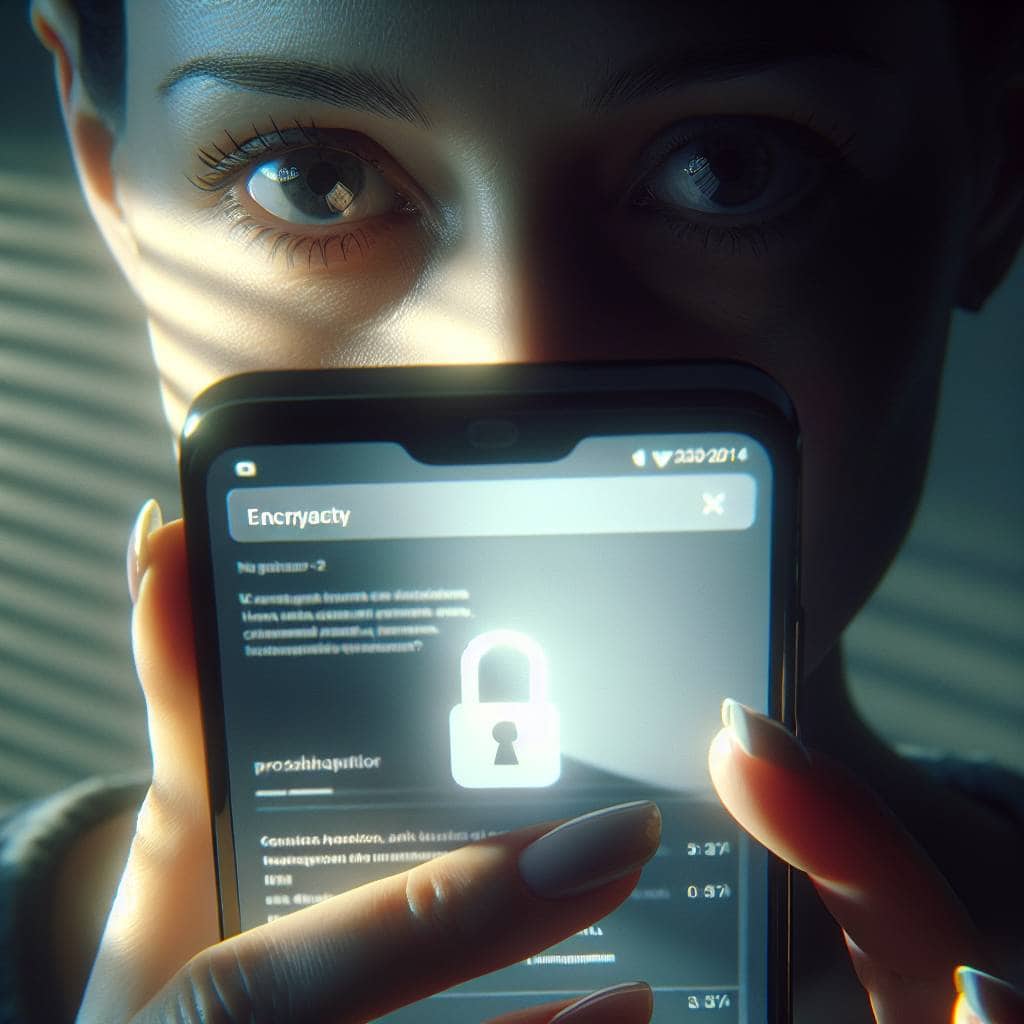
But let’s peel back the curtain on this digital wizardry. In this tangled web of group chats and cryptic codes, is your privacy really as bulletproof as they claim? I’m here to navigate you through this encrypted maze, where we’ll cut through the jargon and uncover the truth behind those comforting buzzwords. From the intricacies of end-to-end encryption to the myth of self-destructing messages, we’ll explore whether your whispered secrets are as safe as they seem—or just another digital mirage.
Table of Contents
- The Encrypted Odyssey: From End-to-End to the End of Time
- The Moment My Chat Self-Destructed (And Why I Secretly Loved It)
- Group Chats: Where Security Meets Chaos in a Digital Cocktail Party
- Cracking the Code: What’s Really Up with Encrypted Chats
- Behind the Veil of Secret Chats
- Decrypting the Mysteries of Chat Security
- The Unseen Whisper of Digital Shadows
The Encrypted Odyssey: From End-to-End to the End of Time
In this digital age, where every keystroke feels like a ripple in the vast ocean of the internet, the journey of our words from sender to receiver is no less than an odyssey. Encrypted messaging apps promise us a kind of magic—an invisible cloak for our conversations, shielding them with end-to-end encryption. It’s the modern-day equivalent of whispering secrets in the dark, where only the intended ears should hear. But let’s not romanticize too quickly. This journey, though encrypted, is fraught with its own perils. The promise of privacy is only as strong as the weakest link in the chain, and sometimes, the specter of a breach looms larger than life itself.
Now, let’s talk about the “self-destruct” feature. It’s the digital equivalent of burning your diary pages, leaving no trace behind. But, like a moth to a flame, we’re drawn to the illusion of safety it provides. We tell ourselves that our group chats will vanish into the ether, yet we all know that one friend who screenshots everything for posterity. It’s a delicate dance between trust and technology, a tightrope we all walk in this era of digital communication. And as our encrypted words journey from one end to the other, we must ponder if they will indeed remain hidden until the end of time—or if they’re just one hack away from exposure. In the end, our faith in this encrypted odyssey is a testament to our desire for connection in a world that seems to thrive on noise.
The Moment My Chat Self-Destructed (And Why I Secretly Loved It)
It happened in the blink of an eye. One moment, I was staring at a string of messages, a conversation that had become its own kind of digital diary. And the next? Poof. Gone. It was as if my chat had taken a swan dive off the precipice of the internet, leaving nothing but a whisper of pixels behind. At first, the empty screen felt like a void, a black hole that had swallowed pieces of my life. But then, like a street artist painting over graffiti, I realized the beauty in the erasure. It was freedom. The kind that comes with knowing that some things aren’t meant to be permanent, that every word doesn’t have to be etched into the stone of server farms.
There’s a thrill in impermanence. Like sandcastles washed away by the tide, those messages disappeared, leaving room for something new. Perhaps it’s the paradox of our age—where endless storage and the digital hoarding of memories often weigh us down. But in that moment, I felt lighter. The self-destructing chat was a reminder that not everything needs to be archived, not every word needs a digital tombstone. Sometimes, letting go is the truest form of liberation. And maybe, just maybe, that’s why I secretly loved watching my chat vanish into the ether.
Now, let’s tackle the not-so-secret underbelly of encrypted messaging apps. We like to think of them as our digital confidants, but sometimes they’re just the gateway to something more intriguing. For those who wander the virtual corridors seeking a more… personal connection, there’s a niche that caters specifically to their desires. Imagine the thrill of navigating encrypted chats, but with the added spice of discovering putas maduras en Madrid. It’s like peeling back the layers of a digital onion, revealing an unexpected oasis amidst the bytes and bits—a place where encrypted conversations can lead to real-world encounters under the vibrant Madrid sky.
Group Chats: Where Security Meets Chaos in a Digital Cocktail Party
Picture this: a digital cocktail party where everyone’s invited, but the bouncer is a cryptographic enigma. Group chats are the unruly children of messaging apps, where the promise of security meets the messy reality of human interaction. The allure of end-to-end encryption is like a velvet rope separating your private conversations from the prying eyes outside. But inside this virtual speakeasy, chaos reigns supreme.
In these chat rooms, secrets slip like whispered gossip, half-truths tumble out amid the noise, and the security that tech giants tout is only as strong as the weakest link—the people. While encryption cloaks our exchanges in anonymity, it can’t stop someone from screenshotting your late-night confessions or accidentally adding your boss to a thread meant for after-work venting. Trust me, it’s like trying to control a room full of toddlers armed with crayons and a blank wall. The promise of privacy is as fragile as the trust between friends, and in this digital arena, both are tested constantly.
Cracking the Code: What’s Really Up with Encrypted Chats
End-to-end encryption is your digital handshake. But remember, even the strongest grip can’t keep secrets if someone in the chain decides to spill.
Self-destructing messages sound like the spy thriller we all want to live in. Yet, once a screenshot’s taken, you’re back to square one in the trust game.
Group chats are the wild west of the messaging world. Sure, they’re encrypted, but who’s keeping tabs on the participants when the conversation spirals?
Behind the Veil of Secret Chats
In the realm of encrypted messaging, true privacy is a whispered wish in a crowded room; even end-to-end isn’t the panacea we want it to be.
Decrypting the Mysteries of Chat Security
What exactly is end-to-end encryption, and why should I care?
Imagine you’re whispering secrets across a crowded room, and only your friend on the other side can hear. End-to-end encryption is like that—your messages are scrambled into gibberish, decipherable only by the intended recipient. This means nosy third parties, including the app itself, are left scratching their heads. It’s about keeping your digital whispers just between you and your confidant.
Can group chats really be private?
Ah, the group chat—a digital gathering where chaos reigns. While end-to-end encryption can protect the messages within, remember, trust in your circle is key. Encryption won’t stop your pals from screenshotting your Saturday night antics. So, yes, the tech keeps outsiders at bay, but for true privacy, choose your group wisely.
Do self-destructing messages actually vanish forever?
In the ideal world, those self-destruct timers would be your safety net, erasing messages before they come back to haunt you. But reality check—screenshots, backups, and the occasional tech glitch mean they might live on beyond their intended demise. It’s like leaving crumbs in a digital forest; someone might still follow the trail.
The Unseen Whisper of Digital Shadows
In the end, my wander through the corridors of encrypted messaging apps has felt like navigating a labyrinth where every turn is both familiar and shrouded in mystery. I’ve come to see these digital vaults as more than just tools; they are the secret chambers where our modern whispers reside, each message a fragile echo in the cacophony of cyberspace. But even in their promise of security, I sense the irony—a self-destruct feature that doesn’t erase the memory, just the evidence. It’s a reminder that no matter how many layers of encryption we wrap around our words, the true vulnerability lies not in the code, but in the trust we place in those on the other side.
Yet, there’s a certain beauty in this digital dance. Much like the forgotten art of a handwritten letter, our group chats become the modern equivalent of passing notes under the desk—fleeting, yet profound in their impermanence. As I step back from this exploration, I am left with an understanding that transcends the binary. It’s the realization that technology, in all its cold precision, cannot silence the human desire for connection. We encrypt not just to protect, but to feel the warmth of a whisper amidst the cold hum of the servers. And perhaps, that’s the most human thing of all.